
Cleaning and Preparing Mussels for Seafood Dishes
Why cider belongs on the shellfish table
Mention oysters and most people reach for a Muscadet or a bone-dry Chablis, and with good reason. But there is a quieter, more local pairing that works just as well, and often better: a dry, orchard-led cider from Somerset or Herefordshire. The logic is simple. Oysters are saline, mineral and faintly sweet, and cider answers them with sharp malic acidity, gentle tannin and a wash of orchard fruit — green apple skin, quince, a whisper of woodsmoke from the barrel. Where a lean white wine can feel austere against a briny Native, a dry cider feels generous without tipping into sweetness.
It is also a matter of place. Britain grows apples and shellfish within a few miles of each other, and both are at their best in the colder months. A pint of keeved cider beside a plate of oysters is not a novelty pairing; it is a regional one.
Reading the cider label
The word "dry" on a British cider label does not always mean what you hope. Look instead for cues that tell you how it was made.
- Keeved cider — fermented slowly so some natural sugar remains. Soft, appley, often around 5–6% ABV. Excellent with raw oysters.
- Méthode traditionnelle cider — bottle-fermented, fine bubbles, 6–7% ABV. Treat it exactly as you would a sparkling wine. Superb with fried or grilled shellfish.
- West Country bittersweet blends — Dabinett, Yarlington Mill, Michelin. Ripe tannin, burnt-orange and leather notes. These want smoked fish, not raw oysters.
- Herefordshire and perry — sharper, more delicate, sometimes cider-apple varieties such as Kingston Black or Foxwhelp. Perry, made from pears, is softer still and a lovely match for crab.
Check the abv and the sweetness scale if the bottle carries one. Anything described as medium or sweet will cloy against shellfish. You want dry, or off-dry at the very most.
Matching cider to the oyster
Native oysters — Whitstable, Mersea, Helford, Loch Ryan — are small, coppery and intensely savoury. They deserve restraint, so pour a dry keeved cider or a lightly sparkling Herefordshire bottle and let the two echo each other. Pacific or rock oysters, larger and creamier, can take more. A Somerset cider with a touch of tannin will cut through their richness beautifully.
Serve both at the same temperature — around 8–10°C. Shocking either one down to fridge-cold mutes everything you paid for. A tulip-shaped glass or a small wine glass beats a pint pot every time, because it concentrates the orchard aromatics rather than letting them drift away.
Keep the condiments honest. A classic shallot and red wine vinegar mignonette is ideal, as is a squeeze of lemon and nothing else. If you want to keep it entirely local, a few drops of cider vinegar in the mignonette is a neat trick and tastes of the same orchard as the glass.
Smoked seafood and cooked shellfish
Once you move away from the raw bar, tannin becomes your friend. Smoke and fat both need something grippy to reset the palate, and a West Country bittersweet cider does that job far better than most wines.
- Smoked mussels — served warm with brown bread, alongside a tannic Somerset cider.
- Hot-smoked trout or mackerel — a dry, slightly sparkling cider with a streak of acidity.
- Dressed crab — perry or a delicate Herefordshire cider; the brown meat in particular loves the fruit.
- Langoustines, scallops, grilled prawns — bottle-fermented cider, served in a wine glass. The bubbles scrub the butter away.
- Fried oysters or whitebait — anything crisp and sparkling, no exceptions.
If you are cooking, a splash of dry cider in the pan with a knob of butter and a spoonful of capers makes an instant sauce for scallops, and the rest of the bottle is already open for the table.
Building the coastal table
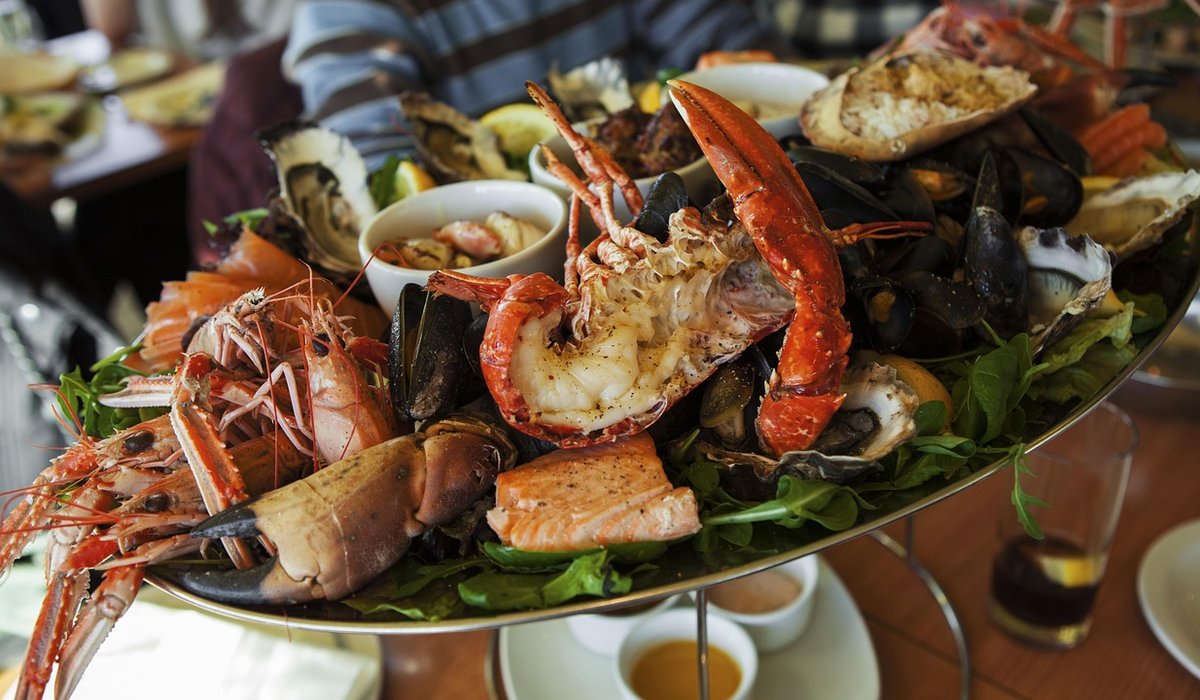
The most satisfying version of this is simple and unfussy: a platter of oysters on crushed ice, a bowl of mignonette, brown bread and salted butter, and two or three ciders poured side by side so people can taste the difference between a keeved Somerset bottle and a sharper Herefordshire one. Add smoked mussels, a pot of picked crab and a dish of grilled langoustines and you have a whole table that tastes of the coast.
Buy oysters from a fishmonger who can tell you the day they were landed and the estuary they came from. Buy cider from a producer who will tell you which apples went in. Both are seasonal, both are best in the months with an R in them, and both reward a little curiosity. Start with one bottle of dry cider and a dozen Natives. You will rarely go back.
LEAVE A COMMENT